The Cross Stands Firm When Chaos Rises and Grace Flows Beyond Pain
- inchristspiration

- Jul 20
- 8 min read
Chaos is loud, but it is not lord.
It can shake homes, nations, bodies, plans, and hearts. It can arrive through a diagnosis, a grief, a betrayal, a storm of anxiety, a season of loss, or a future that no longer looks familiar. Chaos often feels powerful because it fills the room. It demands attention. It interrupts sleep. It speaks in fear.
Yet the cross stands outside the reach of chaos.
The cross of Jesus Christ is not a fragile symbol for peaceful days only. It was planted in the middle of violence, injustice, mockery, darkness, and death. It did not rise in comfort. It rose in suffering. That means it speaks with authority into every storm that tries to convince the soul that God has lost control.
Chaos cannot shake the cross. Pain cannot stop the flow of grace. Nothing can dethrone God.
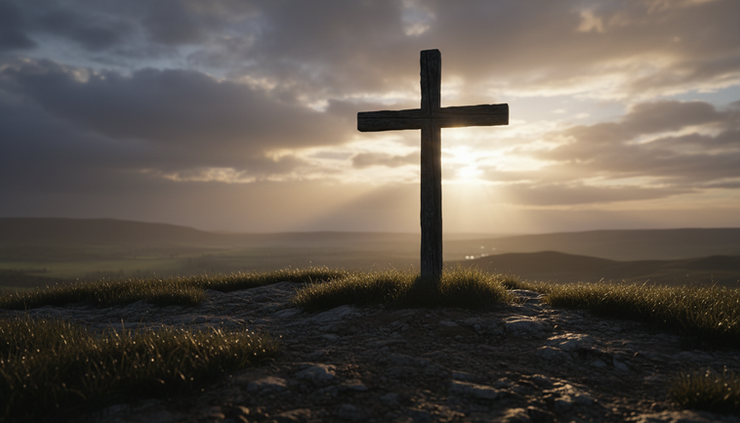
The cross was never shaken by darkness
The crucifixion did not look like victory to the natural eye.
Jesus was rejected by religious leaders, betrayed by a friend, abandoned by many who had followed Him, mocked by soldiers, and nailed to a Roman cross. The sky grew dark. Hope seemed buried under cruelty. To those watching, it may have looked as if evil had gained the upper hand.
But heaven was not confused.
The cross was not God losing control. It was God keeping His promise.
Long before Calvary, Scripture pointed toward a suffering Savior. Isaiah spoke of the Servant who would be wounded for the sins of others. The Passover lamb pointed toward deliverance through sacrifice. The entire story of redemption moved toward the hill where Jesus would give His life.
What looked like chaos was being gathered into the purpose of God.
That truth matters because many seasons of life feel like Good Friday. The facts look final. The pain feels stronger than prayer. The silence feels like absence. Yet the cross teaches us that God can be most at work when the clouds are thickest.
The disciples could not see resurrection while they were staring at the tomb. But resurrection was coming.
The same God who turned the darkest day in history into the doorway of salvation has not become weak in the face of present trouble. He does not panic. He does not step down. He does not surrender His throne because human circumstances turn severe.
When life feels unstable, faith does not rest on the strength of our emotions. It rests on the finished work of Christ.
Grace keeps flowing through pain
Pain has a way of making people feel cut off.
It can whisper that God is distant, that prayers are too weak, that wounds are too deep, that failure has gone too far. Pain often narrows vision until all a person can see is the ache in front of them.
Yet pain cannot block grace.
At the cross, grace did not wait for the world to become worthy. Grace moved toward the guilty, the broken, the ashamed, and the undeserving. Jesus prayed for those who crucified Him. He promised paradise to a dying thief. He gave care to His mother. Even in agony, mercy flowed.
That is the nature of grace. It finds people in places they could never climb out of by themselves.
Grace is not decoration for easy lives. It is the living mercy of God for sinners, sufferers, wanderers, mourners, and the weary. It reaches into hospital rooms, prison cells, empty kitchens, lonely bedrooms, and hearts that do not know how to pray anymore.
Paul learned this deeply. He pleaded with God about his thorn in the flesh, and the answer he received was not the one he first asked for. God told him, “My grace is sufficient for thee” in 2 Corinthians 12:9, using the familiar words of the King James Version. Paul discovered that weakness could become the place where Christ’s strength rested on him.
That does not make pain good. The Bible never asks us to pretend that suffering is pleasant. Jesus wept at Lazarus’s tomb. The Psalms give language to grief, confusion, fear, and waiting. Biblical faith is honest.
Still, pain is not stronger than grace.
Grace can forgive what shame keeps naming. Grace can hold what sorrow keeps breaking. Grace can sustain what strength cannot carry. Grace can teach the soul to say, even through tears, “God is still with me.”

God’s throne is not threatened by human storms
The Bible never presents God as nervous.
Kings rise and fall. Empires swell and fade. Seas roar. Nations rage. Plans collapse. People scheme. Yet God reigns.
Psalm 2 shows the nations in uproar, but the Lord is not shaken. Psalm 46 speaks of earth giving way and mountains falling into the sea, then calls God a refuge and strength. Revelation shows worship around the throne even while judgment and conflict unfold on the earth.
The repeated message is clear: God is not dethroned by disorder.
This is not a small comfort. If God’s rule depended on calm conditions, then every crisis would put His kingdom at risk. But His authority is not borrowed from human permission. He does not reign because life is easy. He reigns because He is God.
The cross proves this in a way nothing else can.
At Calvary, human sin did its worst. Religious pride, political fear, mob violence, demonic hatred, and human weakness converged. Yet none of it dethroned God. None of it stopped redemption. None of it canceled the promise.
The resurrection declared that death itself had limits. The grave could receive Christ, but it could not keep Him.
That means every lesser power has already been put on notice.
Fear has limits.
Sorrow has limits.
Sickness has limits.
Injustice has limits.
Death has limits.
God does not.
This does not mean believers escape all trouble. Jesus told His followers they would face tribulation. The Christian hope is not built on denial. It is built on a King who has overcome the world.
When chaos rises, the question is not whether God can survive it. The question is whether hearts will remember who sits on the throne.
The cross gives courage for the present moment
Faith often becomes most practical in the next breath.
A person may not know how the next month will unfold. They may not know how a loss will heal, how a bill will be paid, how a relationship will mend, or how strength will return. But faith does not require seeing the whole road. It requires trusting the One who walks it with us.
The cross gives courage because it tells the truth about God’s heart.
God did not love the world from a distance. In Christ, He entered sorrow. He bore sin. He carried shame. He stepped into death and broke its power from the inside. The cross is God’s answer to the fear that He does not care.
Romans 8 declares that if God did not spare His own Son, we can trust His goodness. The chapter ends by naming many threats, including trouble, hardship, danger, and death, then declares that none can separate God’s people from His love in Christ Jesus.
That love is not thin. It is not seasonal. It does not vanish when emotions sink.
Some days, courage looks bold. Other days, courage looks like getting out of bed, whispering a prayer, opening Scripture, asking for help, forgiving again, or refusing to believe that despair gets the final word.
Small acts of faith matter.
Here are simple ways to stand near the cross when life feels unstable:
Return to the gospel each day
Remember what Christ has done before you measure what chaos is doing.
Pray honestly
God can receive trembling words, broken sentences, and silent tears.
Speak Scripture aloud
Truth often needs to be heard, not only thought.
Stay close to faithful community
Isolation can make fear sound louder than it is.
Name grace when you see it
A meal, a text, a restful hour, a verse, a sunrise, or a moment of peace can become a reminder that God is near.
These practices do not earn God’s presence. They help the heart notice the presence He has already promised.
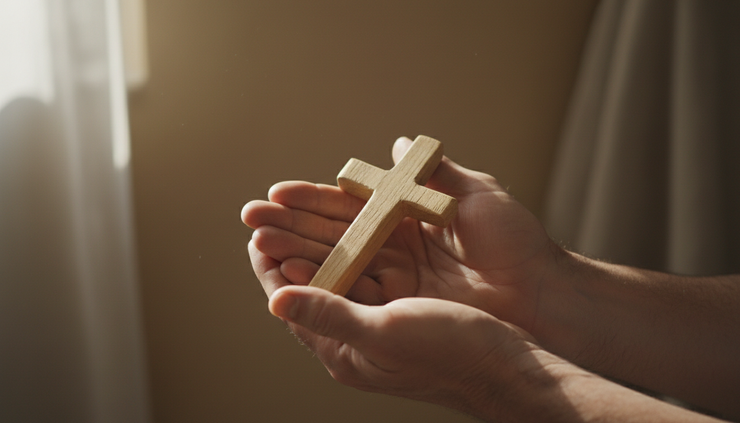
Pain may change the story, but grace writes the ending
Some wounds leave marks.
The risen Jesus still showed His scars. That is worth remembering. Resurrection did not erase the evidence of suffering. It transformed it. The scars of Christ became signs of victory, love, and redemption.
This gives hope to every person who carries scars of their own.
God is not limited to restoring life by making it look untouched. Sometimes He restores by giving meaning where there was only grief. Sometimes He brings compassion from suffering, wisdom from waiting, humility from weakness, and deeper worship from seasons that once felt unbearable.
Grace does not always remove the memory of pain, but it can remove pain’s authority to define the future.
Joseph told his brothers in Genesis that what they meant for evil, God meant for good. That did not excuse their sin. It revealed God’s power to rule over it. The cross carries that truth to its highest point. Humanity meant rejection. God brought reconciliation. Humanity raised a cross of shame. God made it the sign of salvation.
No wound is greater than the Redeemer.
No chaos is more final than resurrection.
No night can overrule the morning God has appointed.
Worship is the soul’s answer to an unshaken God
Worship is not only singing when life feels bright. Worship is also the quiet defiance of fear.
It says, “God is worthy even here.” It says, “The cross still stands.” It says, “Grace is still flowing.” It says, “The throne is still occupied.”
This kind of worship may come through tears. It may sound like a psalm of lament before it sounds like a hymn of joy. God welcomes both. The Bible’s prayers are full of human honesty joined to holy trust.
Habakkuk gives a powerful picture of this. The prophet looked at loss and lack, then chose to rejoice in the Lord. His joy did not depend on visible abundance. It rested in the God of salvation.
That is not shallow optimism. It is rooted hope.
Optimism says things may get better. Christian hope says God is faithful whether the road gets easier or harder. Optimism looks for improved conditions. Hope looks to the crucified and risen Christ.
The cross allows the heart to worship without pretending.
It allows someone to grieve and still believe. To wait and still trust. To fall and still return. To feel weak and still be held.

The final word belongs to God
Chaos speaks loudly, but it does not speak last.
Pain cuts deeply, but it does not control the reach of grace.
Death entered the story, but resurrection answered.
The cross stands as the immovable sign that God’s love has gone to the deepest place and returned victorious. It tells every trembling heart that sin has been dealt with, mercy is still available, and the King has not left His throne.
When the world feels unsteady, look again to Christ crucified and risen. Not as a vague symbol. Not as a distant idea. Look to Him as Savior, Lord, Shepherd, Advocate, and King.
The storm may be real. The grief may be real. The questions may be real.
But so is the cross.
So is grace.
So is the throne of God.
And because Jesus lives, the soul can stand and say with quiet confidence: chaos cannot shake what God has established, pain cannot stop what Christ has opened, and nothing in heaven or on earth can dethrone the Lord.


Comments