Exploring the Complex Themes of Lot and His Daughters in Genesis 19:30-38
- inchristspiration

- May 8
- 3 min read
The story of Lot and his daughters in Genesis 19:30-38 is one of the Bible’s most challenging and thought-provoking passages. It raises questions about survival, morality, family loyalty, and human nature under extreme circumstances. This episode, often overlooked or misunderstood, invites readers to explore deep and complex themes that resonate beyond its ancient context.
In this post, we will examine the narrative closely, reflect on its meaning through a poetic lens, and consider the broader implications for understanding human behavior and ethical dilemmas.
The Context of the Story
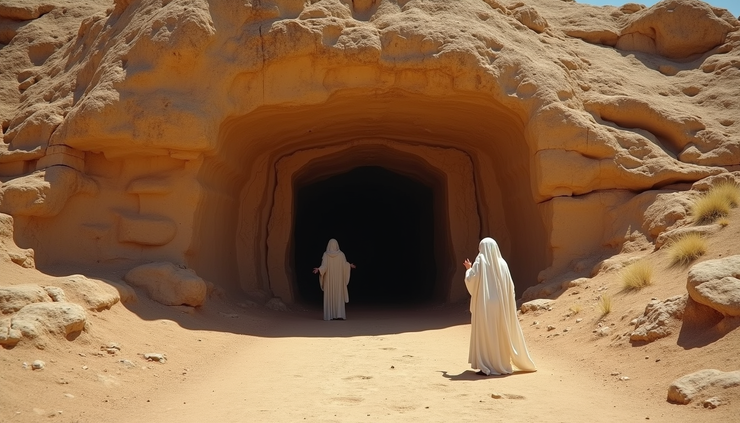
After the destruction of Sodom and Gomorrah, Lot and his two daughters fled to a cave in the mountains. The daughters, believing they were the last people on earth, made a drastic decision to preserve their family line. They intoxicated their father and each bore a child by him, leading to the birth of Moab and Ammon, ancestors of two nations.
This story is difficult to read because it involves incest and deception, yet it is presented without explicit condemnation in the biblical text. Understanding the context helps us see the story as a reflection of survival instincts and the complexities of human morality in desperate times.
Themes of Survival and Desperation
The daughters’ actions stem from a belief that humanity has ended, and their family line must continue. This highlights a powerful survival instinct that can push people to extreme measures. The story forces readers to confront how desperation can blur moral boundaries.
Survival instinct: The daughters prioritize the continuation of their family above social norms.
Isolation: Their seclusion in the cave symbolizes the isolation that can distort judgment.
Moral ambiguity: The narrative does not clearly judge their actions, leaving room for interpretation.
This ambiguity invites readers to think about how people respond when faced with life-or-death situations and the ethical dilemmas that arise.
Family Loyalty and Its Complexities
The daughters’ loyalty to their father and family line is a central theme. Their decision, while morally troubling, is motivated by a desire to protect and preserve their family legacy.
Protective loyalty: Their actions show a fierce commitment to family survival.
Sacrifice and risk: They risk social and personal consequences to ensure their lineage.
Generational impact: The story explains the origins of two nations, showing how family decisions can have long-lasting effects.
This theme encourages reflection on the lengths people will go to protect their loved ones and the consequences of those choices.
The Role of Women in the Narrative
The story places the daughters in a position of agency, albeit within a constrained and desperate context. Their initiative drives the continuation of their family line, challenging traditional views of passivity in biblical women.
Agency in adversity: The daughters take control of their fate in a difficult situation.
Moral complexity: Their actions challenge simple categorizations of right and wrong.
Cultural implications: The narrative reflects ancient views on lineage and inheritance.
This perspective invites readers to consider the roles women play in survival and legacy, especially in patriarchal societies.
A Poetic Reflection on Genesis 19:30-38
To deepen our engagement with this story, here is a poem inspired by the passage. It captures the emotional and moral complexity of the moment:
In shadows deep where silence dwells,
Two daughters weave their secret spells.
A cave their refuge, night their shroud,
Beneath the stars, a fate unbowed.
The father sleeps in wine’s embrace,
Unknowing of the daring grace.
Of daughters bold, with hearts aflame,
To guard their name, to stake their claim.
A line reborn from whispered night,
In darkness born, yet bearing light.
From desperate love, a future spun,
Two nations rise from what’s undone.
No judgment cast, no voices raised,
Just human hearts in fear amazed.
A tale of life, of loss, of trust,
In ancient dust, we find our dust.
This poem highlights the tension between survival and morality, the quiet courage of the daughters, and the ambiguous legacy left behind.
Lessons and Reflections for Today
The story of Lot and his daughters challenges readers to think about difficult questions:
How do people make moral choices under pressure?
What does loyalty to family mean when it conflicts with social norms?
How do we understand stories that do not offer clear judgments?
By reflecting on these questions, readers can gain insight into human nature and the complexities of ethical decision-making.
Final Thoughts
The passage of Lot and his daughters in Genesis 19:30-38 is more than a troubling biblical episode. It is a window into the human condition, revealing how survival, loyalty, and morality intertwine in complex ways. The story invites us to look beyond simple judgments and consider the difficult realities people face.
As you reflect on this narrative, consider how stories from ancient texts can still speak to modern challenges. What would you do in a moment of desperation? How do you balance loyalty and ethics? These questions remain relevant and worthy of thoughtful exploration.


Comments